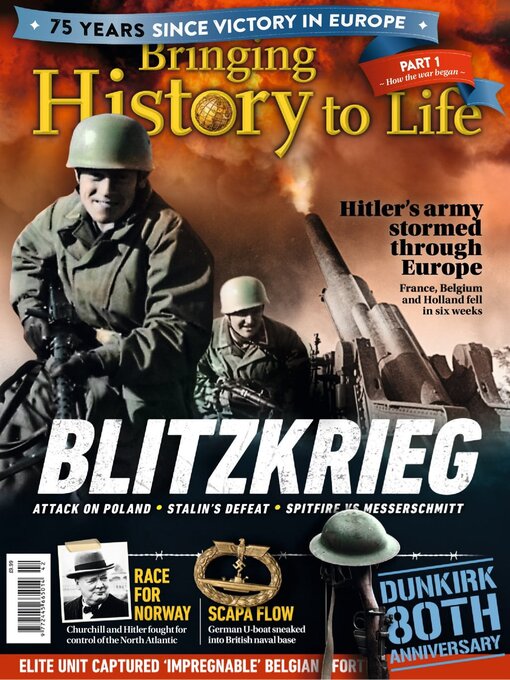
 Blitzkrieg - Part 1
 Mission Impossible - 18 operations that changed the war
 Third Reich at war - From early blitzkrieg glory to undignified defeat in Berlin
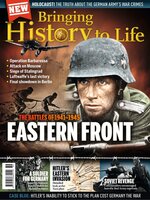 Eastern Front - The battles of 1941-1945
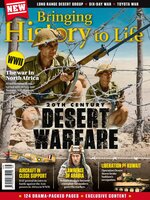 Desert Warfare
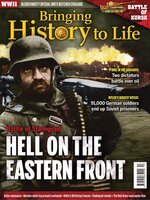 Hell on the Eastern Front
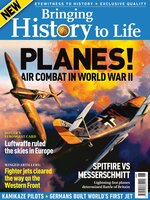 Planes! - Air combat in World War II
 World War II’s Forgotten battles
 The Battle of Britain
 Hidden Heroes of War Elite soldiers
 Air War over Germany
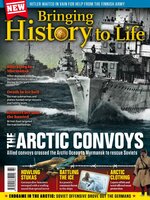 The Artic Convoys
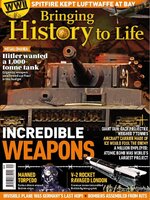 Incredible Weapons
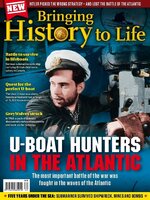 U-Boat Hunters in the Atlantic
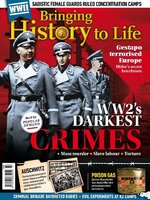 WW2's Darkest Crimes
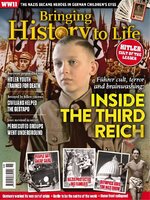 Inside the Third Reich
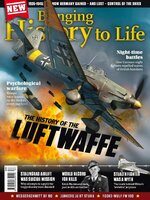 Luftwaffe
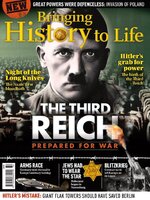 The Third Reich - prepared for war
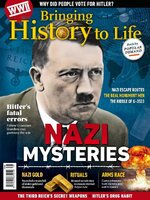 Nazi Mysteries
 Historys Greatest tank Battle
 Panzer!
 Unsolved Mysteries of WWII
 Fall of Berlin
 Battle of Stalingrad
In 1933, Adolf Hitler seizes power in Germany, where he has seduced the population with golden promises of a restoration of the Great German Empire. He allies himself with Mussolini's fascist Italy, Stalin's communist Soviet Union and the military dictatorship in Japan, which has the same dreams of grandeur as Germany. In this series, you get a thorough review of World War II - from the birth of fascism through the war's many dramas to the aftermath, where the victors deal with the war's worst criminals.
» Lightning war rolled through Europe
1939
1940 january - april
1940 may - december
GERMAN TROOPS INVADE POLAND • Adolf Hitler takes a huge gamble when he decides to attack Poland. The country must be defeated quickly to prevent Western European powers – principally Britain and France – from interfering. But the campaign does not go entirely according to the Führer’s plan.
U-BOAT SNEAKS INTO BRITISH NAVAL BASE • World War II is only one month old when the Germans make their first strike on Britain. On 13th October 1939, a German submarine slides into the heavily guarded British military port Scapa Flow on the Orkney Islands and fires seven torpedoes at the battleship HMS Royal Oak.
PETROL & SUGAR ARE WORTH MORE THAN GOLD • With the outbreak of war all international trade comes to a halt, and war-affected countries must learn to survive on local fare alone. Petrol, food, clothing and soap are rationed so that everyone can have access to the limited supplies. In the wake of rationing, black markets develop, where restricted goods are sold at inflated prices.
FROST SHATTERS STALIN’S PLANS • Stalin had set aside 12 days for the war. He thought it wouldn’t take any longer than that for the Soviet Union to defeat Finland, but he was wrong. The Finnish soldiers fought valiantly against their foes, and the Soviet Union paid dearly for its victory – during 105 days of war, at least 250,000 Soviet soldiers were killed.
GRAF SPEE LOSES HER FINAL BATTLE • In 1939, German warship Graf Spee is pursuing British merchant ships in the South Atlantic and capturing their crews. But when Allied warships locate Graf Spee, a naval battle breaks out, which has surprising repercussions for Norway.
TWO MEN RACE FOR NORWAY • Shortly after the British declared war against Germany in September 1939, First Lord of the Admiralty Winston Churchill wanted to open a front against Hitler in Scandinavia. But the British PM, Neville Chamberlain, was hesitant. When the decision was finally made, it sparked a race for control of the North Atlantic.
DENMARK SLEEPS THROUGH BLITZKRIEG • At 04.15 on 9th April 1940, German troops crossed the border into Southern Jutland. Simultaneously, German ships sailed into major Danish ports, while low-flying German bombers buzzed over the country’s cities. The government and king had to decide quickly whether to fight a hopeless war or swallow their pride and signal Denmark’s surrender.
NORWAY FALLS • In 1940, Hitler decided to test the Allies’ strength during the invasion of Norway. However, after a month of hard fighting in and around the crucial port city of Narvik, the Germans were ready to admit defeat and retreat home through Sweden, but then the Allies did something unexpected...
ELITE SOLDIERS CAPTURE BELGIAN FORT • On the morning of 10th May 1940, German gliders land on the top of Belgium’s strongest fortress, Eben-Emael. Ten minutes later, the fort’s guns have been blown to pieces and the way is clear for the invasion of France.
BLITZKRIEG FORCES EUROPE TO ITS KNEES • At the beginning of World War II, Germany has fewer tanks, soldiers and aircraft than France and Britain. However, Prussian General Heinz Guderian has, with Hitler’s approval, developed a groundbreaking military tactic: blitzkrieg. This new...